The installer exists to compress the dangerous part of the learning curve
The most expensive part of setting up OpenClaw is usually not the first command. It is the stretch after that command, when the machine technically runs but the operator still has weak routing, loose approvals, unclear rollback, and no disciplined handoff into the next layer of hardening.
That is where time and money quietly disappear.
The guided installer exists to take the bulk of that setup logic and make it repeatable:
- It asks the setup questions in order.
- It pauses at human checkpoints instead of pretending every dependency can be automated away.
- It writes a usable config scaffold.
- It creates rollback material before it changes the operating state.
- It gives the next Coding Agent a real handoff instead of a vague prompt.
Where people usually lose time
Most bad OpenClaw setups fail for ordinary reasons:
- The wrong model gets assigned to the wrong lane.
- Mobile control is treated like an afterthought.
- Approvals are loosened too early to make the first run feel smoother.
- The operator changes too many settings before proving one useful workflow.
- A Coding Agent is asked to “just fix it” without any handoff or validation discipline.
That last one matters.
A Coding Agent can save a huge amount of time if it is used like a disciplined operator, not like a cleanup crew that starts widening permissions to force a pass.
What the installer should do by itself
The installer is the right tool when you need a clean starting posture fast.
It should handle:
- Profile selection.
- Baseline config generation.
- Answers capture.
- Validation scaffolding.
- Rollback files.
- A handoff file for the next implementation pass.
It should not be asked to solve every OS-specific or runtime-specific problem automatically. That is where brittle “magic setup” scripts usually start promising more than they can safely deliver.
Where a Coding Agent actually helps
After the installer has produced the generated files, a Coding Agent becomes useful for the next layer of work:
- Validating model names and runtime availability.
- Fixing path mismatches.
- Patching small config issues without widening permissions.
- Rerunning health checks and explaining what still blocks a stable first run.
- Proving one useful workflow end to end.
This is the right division of labor:
- Installer for disciplined scaffolding
- Coding Agent for careful hardening
- Human operator for approvals, judgment, and final widening decisions
Guardrails that should survive setup
The installer and the Coding Agent should protect the same four things:
- Approvals.
- Rollback.
- Health checks.
- Narrow auth and control boundaries.
If the first “successful” setup only works because those guardrails disappeared, the system is not more useful. It is simply easier to break in ways the operator will only discover later.
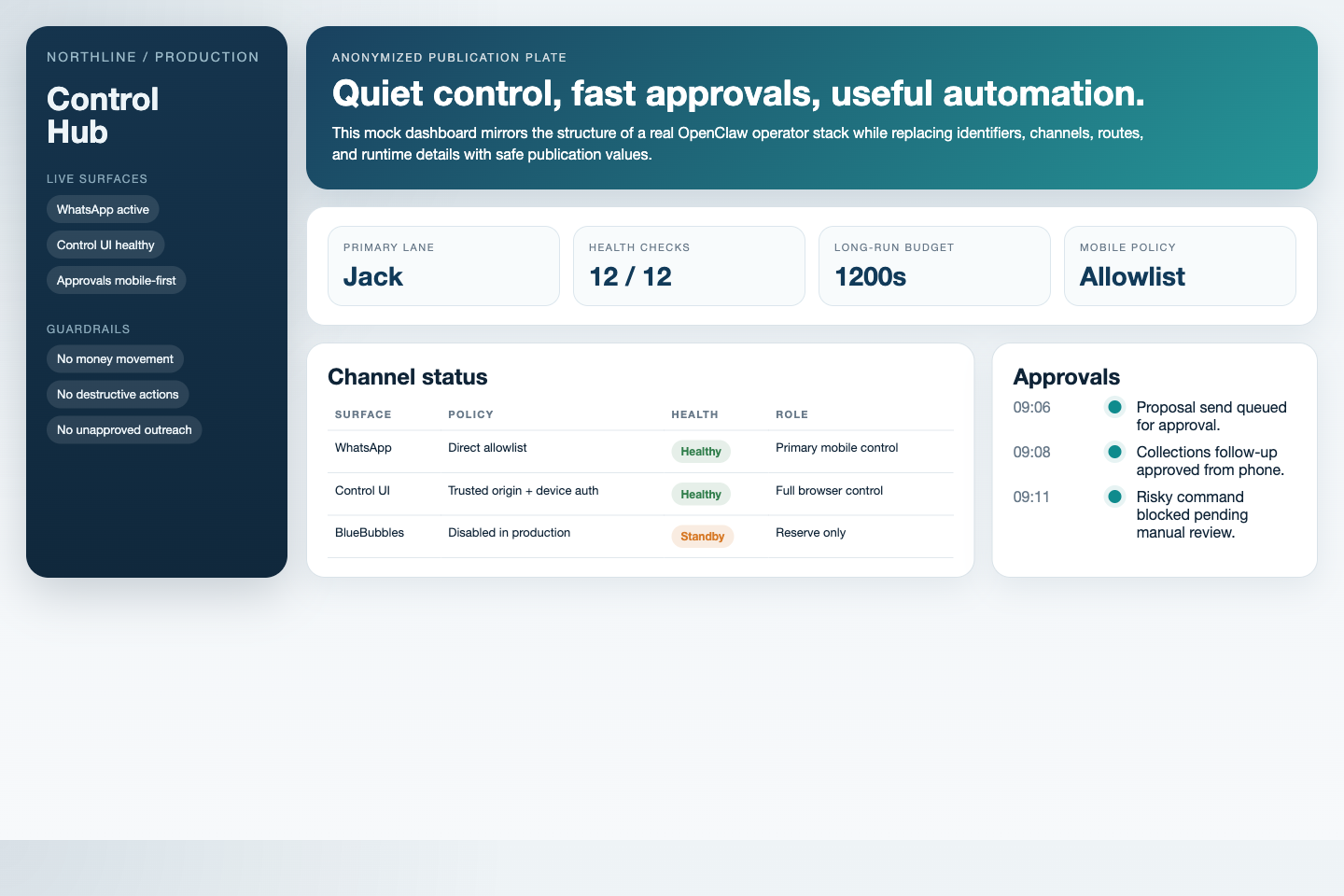
A stable control surface matters. The operator needs a narrow, understandable place to see what the system is doing.
A practical setup sequence
If you want the cleanest path from zero to useful, use this order:
- Choose the right profile for the actual use case.
- Run the installer interactively the first time.
- Review the generated files instead of trusting the machine blindly.
- Hand those files to a Coding Agent with explicit instructions not to widen approvals or remove rollback.
- Run validation again.
- Prove one useful workflow.
- Only then expand channels, concurrency, or extra agent behavior.
Why the handoff matters
The installer is strongest when it ends by producing a real handoff bundle:
answers.final.tomlopenclaw.generated.jsonvalidation-report.jsoninstall-manifest.jsonagent-handoff-<profile>.md
That bundle turns a Coding Agent from guesswork into a controlled second pass.
Without it, the agent has to infer intent from a half-working machine. That is when people accidentally remove the very constraints that were keeping the system safe.
What a healthy first win looks like
A healthy first win is boring on purpose.
It is not a sprawling autonomous agent demo. It is one workflow that:
- Starts cleanly.
- Routes to the right lane.
- Respects approvals.
- Survives a restart.
- Can be explained simply to a human operator.
That kind of win is what lets the system scale without becoming fragile.
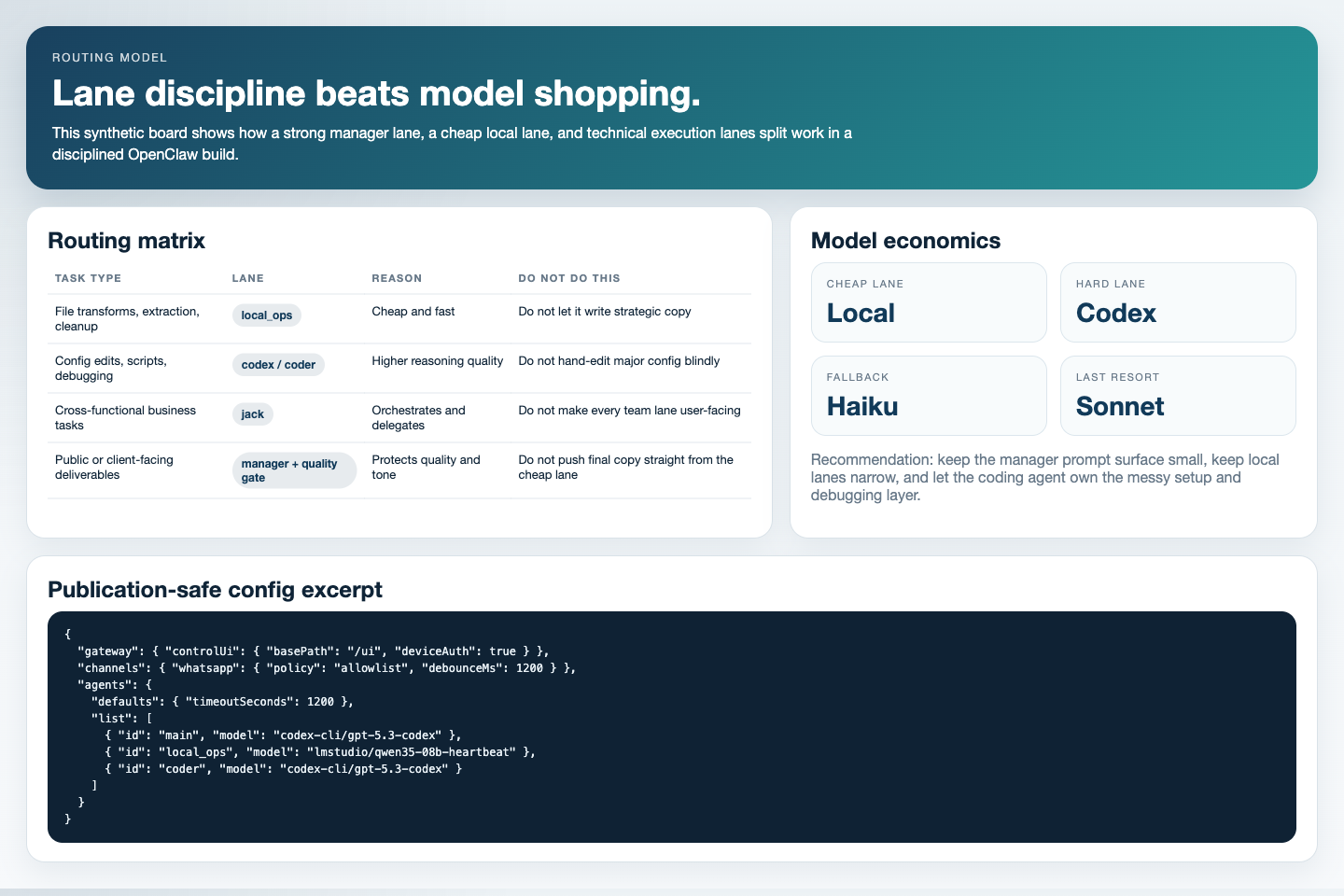
Good routing is not cosmetic. It is what keeps useful work from turning into noisy, expensive confusion.
Use the packaged route when you want the fastest responsible start
If you want the shortest path to a clean operating posture, Harper Digital’s OpenClaw guide line gives you:
- The books.
- The guided installer.
- The implementation sequence.
- The reasoning behind the guardrails.
That makes it easier to move quickly without learning the hard lessons in the most expensive order possible.